9-22 Reading
pp. 13-15 - entries on Form, Movement
pp. 17-18 – entry on Tempo
pp. 95-98 - entries on Baroque Era and Basso Continuo
pp. 102-103 - entry on Figured Bass
pp. 110-111 - entry on Ground Bass
pp. 113-114 - entry on Walking Bass
Form
The way music is laid out
- AB (binary) or ABA (ternary
Movement
A movement is a self-contained portion of music within a larger piece. Each movement sounds like a complete piece of music. Don't clap between movements
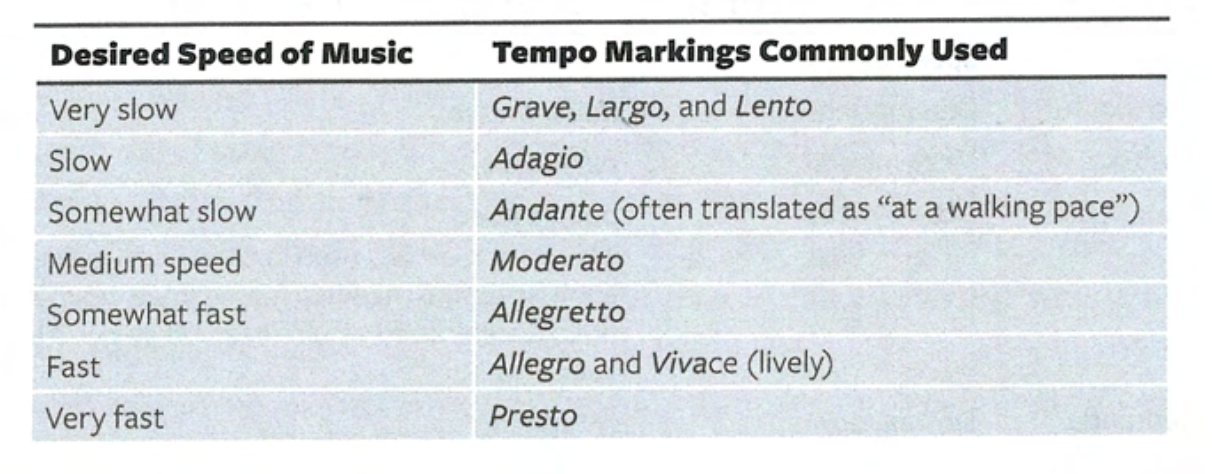
Tempo
Tempo is the speed of music
Baroque Era (1600 -1750)
- Focus shifted to instrumental music that is meant to be listened to, not just an accompaniment.
- Most instruments we know today are from the Baroque Era (but simpler)
- Super high quality instruments
- Keyboard instrument was harpsichord
- By around 1700, the piano was gaining popularity
- Opera became more popular - so did opera houses.
Basso Continuo
- A performance technique in which improvised chords are added to the bass line
- Played on a keyboard or guitar
- Provided the same bass line as other instruments and improvises based on that
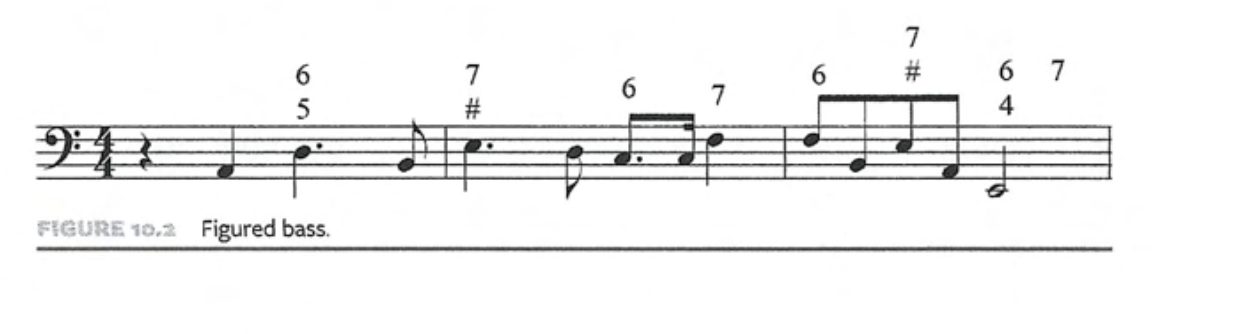
Figured bass
A set of symbols written above/below the bass line to help the keyboardists realize the bass line.
Ground bass
Rhythm of the bass line repeats over and over again. (Ex: Canon in D)
Walking bass
Each note in the bass line has the same duration. Pitch can differ.